Scottish Government Wildlife Bill to ban all muirburning on peatland
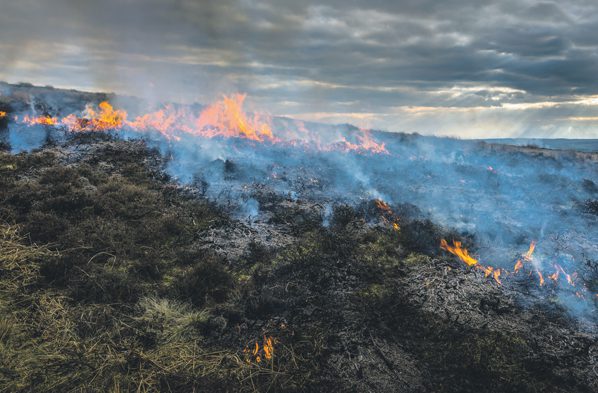
New proposals put forward by Scottish Government will introduce a ban on all muirburning on peatland and require a licence for every muirburn carried out on other types of land. The ban will see the majority of Uist’s burns rendered illegal.
The proposals are part of a new Wildlife Management (Grouse) Bill, due to be published in the 2022/23 parliamentary session and out for consultation until until 15th December.
The new Bill is based on the findings of an independent review of grouse moor management, known as the Werrity Report, and covers a range of measures including the introduction of new licensing requirements for grouse shooting and restrictions on snaring and trapping.
The current Muirburn Code sets out a range of stipulations about how and when land can be burned, prohibiting burns outside the agreed 1 October to 15 April season, restricting burns on certain areas, for example Sites of Special Scientific Interest (SSSI) and encouraging those planning muirburns to alert the relevant landowners in advance. The Code is accompanied by common sense safety guidance, including the advice that burns should not be started between one hour after sunset and one hour before sunrise or within 30m of a public road and that fires should not be left unattended.
While the current Code advises against burning on peatland, there is currently no legal prohibition against it, unless on SSSIs.
The new legislation sets out a much more stringent approach, putting in place a statutory ban on all muirburning on peatland (currently defined as peat of a depth of 40cm or more) unless it is part of an approved habitat restoration programme, to protect public safety or for the purpose of research. The legislation will also introduce the requirement for a licence to be obtained for burning on a limited range of permitted areas, such as dry heath.
The Consultation document states: “The impacts of burning on carbon release and sequestration on moorland are disputed and there is conflicting scientific evidence. However, given the importance of peatland to Scotland’s net zero target, we have taken the view that a precautionary approach is required until there is more consensus on the impacts of muirburn.
“Peatland restoration is a key part of the Scottish Government’s goal of achieving a net-zero Scotland by 2045 as peat soils cover almost a quarter of Scotland, about 1.7 million hectares, storing some 1.6 billion tonnes of carbon – the equivalent of an estimated 140 years of Scotland’s emissions. If we continue to allow unregulated muirburn on peatland, the progress that has been made restoring Scotland’s peatlands could be negated by damage caused by muirburn.”
Scottish Crofting Federation Chair Donald Mackinnon said: “Muirburn is an important tool that crofters should continue to have available to them for the management of hill grazing….While it is not crofters that are the target of this proposed legislation, it is clear that crofters will be affected. SCF does not oppose the principal of licensing but any scheme must be proportionate to the activity being carried out, a one size fits all approach will not work. Licenses should be easily obtainable for those already following best practice. We need to understand more about the implications of the proposal to ban burning on deep peat, we recognise the climate impact of this activity but there may still be specific areas where this practice is appropriate and exceptions should be possible.”
The Wildlife Management (Grouse) Bill consultation closes on December 15th.