Wake up and smell the coffee
One way or another, the last few years have felt like a battle.
Covid threatened so much of what we took for granted and the subsequent economic squeeze is still playing out with devastating consequences for households, local businesses and our stretched to breaking point public services.
Despite the best efforts of the Uist repopulation project, the idea of ‘a new Highland Clearance’ is no longer an overly dramatic headline but a cause for genuine concern.
Budget proposals for the coming years set out that stark reality – £1.7m worth of cuts to the Comhairle’s service delivery plan and a further £4.1m savings lined up for NHS Western Isles.
Included in the Comhairle’s budget strategy are proposals to remove ‘four posts without backfill from secondary schools’, a reduction in supply budgets to provide classroom cover and reduced funding for Taigh Chearsabhagh, EDF and Fèisean nan Gaidheal.
The fate of these services is in the hands of our elected members as they cast their votes in this month’s round of Council meetings.
Quietly, behind the scenes, vacant posts that have proved difficult to fill are removed from the establishment. The role of mobile librarian is now at the centre of a service review that could save the Comhairle £100k. The same approach is being taken by the Health Board as it considers whether to continue with the 24/7 consultant psychiatry service currently staffed by a costly locum.
These service cuts aren’t some abstract notion happening away from our lives, they are real and felt keenly right here in Uist: the family of a disabled child struggling to cope without the care and support they need, cancer patients left out of pocket after ferry chaos impacts have clocked up longer stays and rescheduled trips, potholes unfilled and roadside ditches left unattended.
Another example of this quiet taking away is Loganair’s withdrawal of its fuel farm service at Benbecula Airport, leaving the Coastguard and the Air Ambulance without the option of refuelling here on Uist. On the face of it, a small move with, no doubt, plenty of evidence to support it; aircraft refuelling isn’t something we will need every day, but as with a first aid kit, we will surely know its loss when emergency strikes.
And on top of it all, every passing month seems to mark a new low for our failing ferry service; what was once the pride and joy of staff and passengers is now the subject of national ridicule and local scorn.
Bit by bit, as if by stealth, services are being taken away, standards are slipping and in response, we are slowly lowering our expectations to recalibrate what ‘normal’ is.
So what are we to do? Sit back and bemoan our losses or fight for our right to be?
We are often told that we should not ‘talk up’ the negative; that doing so will only discourage new people from coming and depress those of us already here. But it isn’t positive thinking to ignore our current issues and sleepwalk into worse, it’s reckless abandonment.
Talking about what’s wrong – shouting it from the rooftops if need be – is the necessary first step on the road to putting it right.
For that we need a seat at the table, and without it, we might as well be shouting to the wind.
The Boards of our transport services have members from across the world, yet none from here; would having ANY local representation on the CalMac Board help ensure decisions taken about our ferry service do actually reflect the needs of islanders? I think so.
It is easy to feel defeated, to throw our hands in the air and resign ourselves to our reduced circumstances but when we do take action, we can deliver change.
Our coherent and compelling case against Highly Protected Marine Areas resulted in a firm, publicly-made assurance from the First Minister that our waters would not be designated against our wishes.
And what of the ferries? How many different groups and individuals are fighting this particular cause? Our elected members are leading the charge, our community councils are putting up a strong fight and business and community leaders are making clear their demands. It remains to be seen if these campaigns will deliver positive outcomes.
This edition of Am Pàipear has other examples even closer to home.
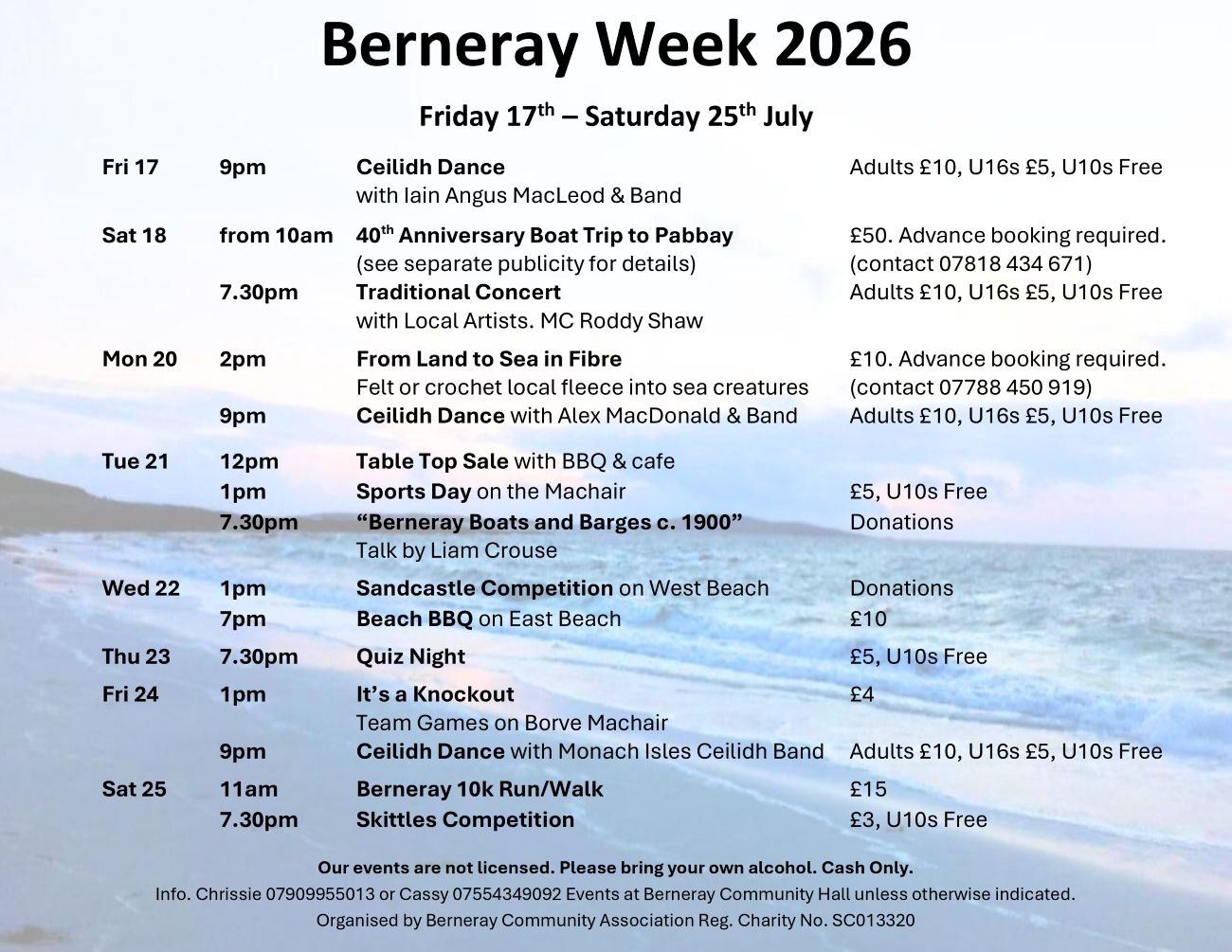
In Berneray, residents have banded together to petition the Comhairle for the continuation of the mobile library service in the face of budget cut proposals.
The Benbecula Patient Participation Group (PPG) is fighting to get proper compensation for those left out of pocket after attending off-island medical appointments.
Our third sector organisations are pushing to reinstate our voice at the Integrated Joint Board (IJB) through the re-establishment of Uist’s Locality Planning Group (LPG), a forum which once helped shape policy on health and social care but is now no longer in operation.
These groups are not empty acronyms, they are our friends and neighbours, putting their time and effort into fighting for what’s ours. And they can’t do it alone.
Across Uist, there are committees and boards struggling with too few volunteers; we need more shoulders to the wheel if we are to turn things around.
In fighting to regain our losses we shouldn’t lose sight of what we still have.
Our local businesses need our support, and in all honesty, every Amazon parcel is another pound not going through our Uist tills and that will, inevitably, lead to closures. We need our businesses to thrive, to employ our people and supply our goods.
Project Uist is a job for us all. There is strength in numbers and speaking with one voice creates more noise and it certainly carries more clout.
What better forum for that strong collective voice than this newspaper, which has steadfastly been serving this community for almost five decades?