Managing Director of Kallin Shellfish Ltd – NAMARA Seafoods
The Scottish Government has begun a consultation on the introduction of new Highly Protected Marine Areas (HPMAs) in the waters surrounding our islands. The consultation closes on the 20th March and ‘stakeholders’ are invited to submit their views.
In these new HPMAs, no fishing will be allowed to take place and many other activities which could prove beneficial or even vital to our islands economy in the future will be forbidden. I will stick to the fishing perspective as that is what I know and hopefully others will pick up on other aspects.
We are indeed all stakeholders in the marine environment, but we do not all have an equal stake. Those who stand to lose their jobs and have their businesses destroyed have much more to lose.
The belief that closing our waters to fishing will support marine biodiversity is a mistaken one, as the closure of Broadbay in Lewis has proved. Prior to its closure, Broadbay was a prolific scallop fishing area with all the associated benefits to our economy. Thirty years after its closure, Scottish Government’s own scientists have evidenced that the scallops have all but disappeared, with the waters now over populated by predatory starfish.
It is an oversimplification and a lack of understanding of how nature works to suggest that stopping all fishing will give us pristine waters and an abundance of sea life in the water column and on the seabed.
Nobody knows the sea better than those of us who rely on it for our living.
Kallin Shellfish Ltd is a local family-owned company. Our staff of 25 are a mix of local and Eastern European workers. We have a higher rate of female to male staff and all staff are paid equally and well.
We were the first business to bring Eastern European staff to the islands. With a great deal of effort by themselves and ourselves they have integrated well into our community – no small feat when you consider the difficulties of language, travel and housing. The first ones who came are now in positions of greater responsibility and in some cases, we have the second generation in employment with us. These new workers have played a significant role in offsetting our declining population, helping maintain our school rolls and adding greatly to our community.
It is not Brexit that will cause these people to leave our islands but HPMAs, Marine Protected Areas and the plethora of closures that our governments sees fit to impose on our communities.
Although as a company we purchase and process all types of shellfish from our island fishermen, scallops is our bread and butter and it is largely what sustains us as a company. Losing access to waters that we have fished for generations will be the last straw for island processors. We have lost fishing grounds to fish farming and previously imposed MPAs. The Wester Ross and Firth of Lorne closures have displaced fishing effort into ever smaller areas that is likely to cause overfishing. This is now more widely known as Spatial squeeze and more of it is likely to happen in the future with the advent of marine windfarms.
Why are there so many closed areas and proposals to close large areas of sea in our vicinity? Could it be because we are seen as an easy target? Not enough people to make a hue and cry? A population cowed and submissive?
As a company, we have been fighting against these marine closures for all the 22 years of our existence. In that time we have invested heavily in our processing factory and in modern and safe fishing vessels. The constant attempts by the green lobby, now in cahoots with the Scottish Government, is devaluing our business and our fishing vessels. Is this the plan?
We are now required to carry on board a host of monitoring equipment, which relays information straight back to Government. Where we fish, what we fish, how we fish and what we do is already the subject of close scrutiny and in the latest regulatory move, we now are required to carry intrusive on-board cameras. All this equipment and the charges for our airtime transmitting data have to be paid for by the fishermen and we are not allowed to go to sea without it.
We believe that all the information gathered from all this data is being used to determine where our best fishing grounds are so as to stop us from accessing them. Such is the distrust which has built up. We were told that all this monitoring was for our own good as we could use the data to easily prove that we were not breaching closed area regulations, as we were often accused of doing.
Unfortunately, the moderate and sensible people within the government have been shunted aside and silenced in order to gain the support of the radical green lobby and secure a majority in Parliament.
We already have an accelerating population decline in the Southern Isles. The ongoing ferry fiasco and the ever increasing isolation which it has brought about is having a demoralising effect on people. We have already lost staff to mainland employment as a result of it and it is contributing to a reluctance in people to move to the islands.
Having HMPAs is not going to encourage anyone to settle here or start up businesses.
Being able to fish in the Sound of Barra is vital to us and that is why we have been fighting so hard to be able to fish there. It has the best and largest scallops in the UK, despite 50 years of scallop fishing – sustainable or what?! After COVID, it was the product that enabled us to get back going again. It is in great demand, as indeed is all shellfish from our islands. Is this all now to be sacrificed on the altar of going ‘above and beyond’ what the international agreements require of the Scottish Government?
Having a HMPA imposed on us is going to be the cause of business failure, unemployment and even more population decline.
Have things changed very much since our forefathers’ families were forced off the land by conflicting ideas from outside interests? This time it is not the land but our greatest asset, the marine environment. The ideology is the same from those in power: we know what is good for you! Island clearances all over again.
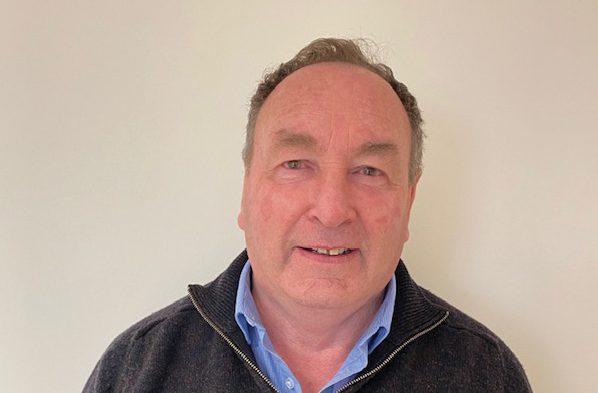
Opinion: Hector Stewart


Latest News
- Six Candidates, One Island Seat — Let the Political Punch‑Up Begin

- Another Day, Another Ferry Headache for the Western Isles
- Islands Cry Out for Help as Ferry Crisis Hammers Easter Trade

- £300 Heating‑Oil Lifeline Opens as Bills Bite Hard

- Funding Boost helps Stoneybridge Hall Step Up as South Uist’s Resilience Centre