Cost increases and tax rises will affect all households in Scotland
Abigail Taylor
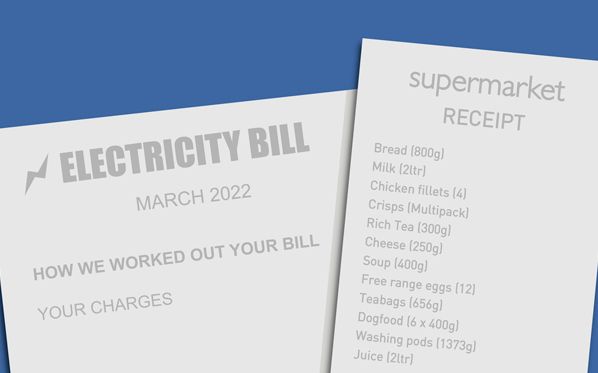
Island households face a toxic cocktail of cost increases and tax rises in the weeks to come, adding to the considerable financial burden many individuals and families shoulder in the Outer Hebrides.
National Insurance and council tax will rise in the spring, energy prices have already rocketed, and the cost of groceries and a tank of fuel is already above the national average in the Western Isles.
Rising inflation is making headlines across the country, reported to hit a 30-year high, at 5.4 percent, in January.
Subsequently, at the beginning of last month, OFGEM announced that the price cap, which sets the average price for energy bills from utilities, would rise from £1,277 to £1,971 a year for standard tariff customers and £1,309 to £2,017 a year for prepayment meter customers in April.
It has been noted that the rise represents 54 percent increase in the price cap and that residents in the Western Isles already pay energy costs often 30-50 percent higher than the mainland.
People in the Western Isles already experience the worst levels of fuel poverty in the Scotland and the new hike in the price cap, which OFGEM says is as a result of a fourfold rise in wholesale energy prices worldwide, is expected to cost most households, on average, £693 more per annum.
Responding to the rise in the price cap, Finance Secretary Kate Forbes outlined plans to give 73 percent of Scottish households, those in council tax bands A to D and those eligible for council tax reduction, a £150 payment, with a further £10 million to be targeted at people struggling with fuel bills.
Alasdair Allan MSP, said: “Matters cannot continue as they are, with crippling energy bills for islanders set to get even worse if no interventions are made.”
He said that the Scottish Government cost of living payment would help many, but was not enough, and called for urgent action from the UK Government. Dr Allan noted that the power to legislate on energy matters rests with Westminster.
“I am calling on the UK Government again to urgently reconsider their unfair and outdated energy distribution levies and to commit to doing far more to support people in the islands and across Scotland.”
Tighean Innse Gall, through the ‘Gluasad Comhla’ principle of moving services together, where if someone needs support from one service, they also receive assistance from others, works closely with the Comhairle nan Eilean Siar financial inclusion team, Home Energy Scotland, Macmillan Benefits and Western Isles Citizens Advice Service. Help provided includes support through energy advice to cut bills, delivering energy efficiency support through the home energy efficiency programme on behalf of the council, applications for financial support for prepayment meters, fuel debt alleviation, warm home discount applications, and small energy measures to help reduce energy use immediately.
Tighean Innse Gall energy services director, Dan Morrison, said: “We knew this was coming but even, so the level of the increase is shocking. Tighean Innse Gall can help in many ways, so please get in touch.”
It was reported in the Scottish Housing Condition Survey that 40 percent of all households in the Outer Hebrides are in fuel poverty, compared to the Scottish average of 24 percent. However, the scale of the issue is more stark when the figure for extreme fuel poverty is factored in, presently standing at 24% of all households in the Western Isles.
In addition to increasing energy costs, council tax is to be raised three percent in the Western Isles in April. Comhairle nan Eilean Siar agreed the increase when it set its budget last month, having received a one year settlement from the Scottish Government, with a net reduction of £0.2 million, leading to a deficit in the draft budget of £0.541 million.
National insurance payments will also be increased at the beginning of the next financial year in April.
Under the plans, employees, employers and the self-employed will all pay 1.25p more in the pound for National Insurance for a year starting in April. After that, the extra tax will be collected as a new Health and Social Care Levy.
Incoming changes to National Insurance will see an employee on £20,000 a year pay an extra £89 in tax, while someone on £50,000 will pay an additional £464. However, also from April, people earning less than £9,880 a year, or £823 a month, will not have to pay National Insurance and will not have to pay the new Health and Social Care Levy.
Rises in tax and energy costs compound will add increasing pressure to households already squeezed in the Western Isles.
Am Pàipear conducted a simple analysis of basic costs between Benbecula, Inverness and Glasgow. Fuel prices were compared and also the cost of a small list of basic good purchased from supermarkets (similar branded items and identical quantities were compared, with prices sourced from mainstream supermarkets).
Significant differences were found in fuel prices, as might be expected, with petrol costing 145.9 p/litre in Inverness, 148.9p/litre in Glasgow and 160.9p/litre on Benbecula (12p dearer than the next highest location) on 24th February 2022. Similarly, diesel cost 147.9p/litre in Inverness, 151.9p/litre in Glasgow and 166.9p/litre on Benbecula on 24th February 2022. Higher fuel prices, compared to the mainland, are usual in the islands and serve to highlight the even greater basic cost of living in the Western Isles.
Oil prices were on the rise at the time of writing, the price of a barrel of oil surpassing $100 a barrel at the end of the month, causing some expectation that fuel prices would continue to go up, creating further pressure for motorists in the Outer Hebrides.
Groceries compared favourably for some products, with vegetables coming in at the same price in Inverness, Glasgow and Benbecula. However, several essential items were found to cost more, for example, a 2ltr bottle of semi-skimmed milk cost £1.35 in Inverness and Glasgow, compared to £1.50 on Benbecula. Bread cost £1.10 in Inverness and Glasgow and £1.30 on Benbecula.
Readers can compare the prices sampled in Glasgow, Inverness and Benbecula in the tables below, with data captured on 24th February 2022.
With household income set to be crunched further in the coming weeks and prices for basic commodities already higher than the mainland, the months to come will prove challenging, in particular for those on modest earnings in the Western Isles.