Easier appointments for patients with dementia
The issues surrounding access to GP services for people with dementia will soon be tackled at surgeries across the Western Isles, thanks to the pioneering work underway at Benbecula Medical Practice.
New guidelines for making GP surgeries more dementia friendly have been developed by Healthcare Improvement Scotland and Alzheimer Scotland, which should make accessing medical care easier for the estimated 90,000 people living with dementia in Scotland. With GP surgeries often being the first port of call for people with dementia and their families, the guide aims to help staff ensure this experience is as easy as possible.
One of the earliest examples of implementation can be found at Benbecula Medical Practice, where GP Dr Kate Dawson is already seeing a significant increase in patients coming forward for memory checks as a result of these efforts. Dr Dawson spoke to Am Pàipear about the work: “With our older population, identifying and managing dementia well is important. Because of this, I agreed to contribute to the new ‘dementia friendly general practice’ tool, and then to test it out in our practice. I had thought we had a good understanding of our patients in our small practice, but using the tool has helped us find where we needed to improve, and guided us to making changes collaboratively. We have identified lots of good practice in our team along the way as staff members have revealed hidden talents and implemented good ideas.”
The difficulties that people with dementia face when trying to access GP services are varied and can include remembering to attend appointments, navigating the physical environment of the practice, struggling to express their concerns in short appointment times and forgetting details of discussions regarding their care.
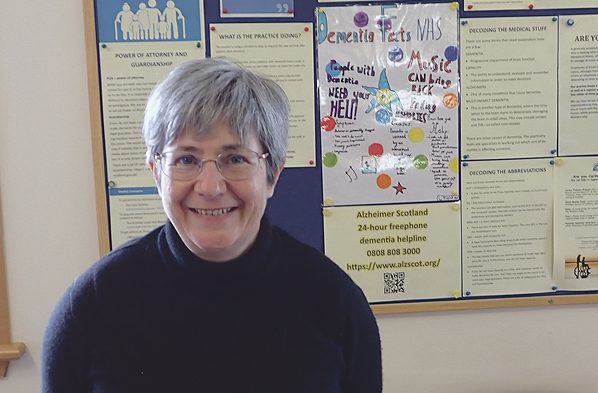
Among the measures that have been put in place are a dementia information board in the waiting room outlining the aims, offering double appointments, informing carers about changes in medications, dementia awareness training for staff and dementia specific information on the website.
The Practice has sourced training for staff around the protection of vulnerable adults and the ways in which dementia affects communication. They have also made contact with Tagsa Uibhist’s new post-diagnostic support worker and hope to link people up to dementia friendly community activities, services and facilities.
Following the great work done at the Benbecula Medical Practice, similar changes will soon be rolled out elsewhere.
Ruth Glassborow, Director of Improvement at Healthcare Improvement Scotland, said: “As the work in Benbecula Medical Practice shows, this is a very practical guide that can be used flexibly. It provides a structure for identifying what to focus on and resulted in several improvements to ensure people with dementia and their carers can be supported in the community for longer and with a better quality of life.”
With the number of people affected by dementia across the country predicted to increase, and the serious impact that difficulties in accessing GP services can have on quality of life and health, Dr Dawson is keen to state the importance of early recognition: “Seeking help early allows for early diagnosis. Many of the treatments for dementia work best during the early stage. We have 12 patients on our list with dementia at present. This is the lowest number for some time. We suspect that the pandemic has meant that people have not been in contact with others so often, and as a result, memory loss has not been noticed.”
The Practice will continue working through the guide over the next year and their next step will be to ask families involved in caring for someone with dementia for their ideas.