Local vets launch St Kilda feral sheep petition
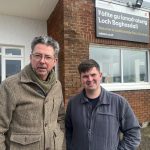
Local vets David Buckland and Graham Charlesworth have lodged a petition with the Scottish Parliament in a bid to minimize the level of starvation and associated suffering in the feral sheep of St Kilda.
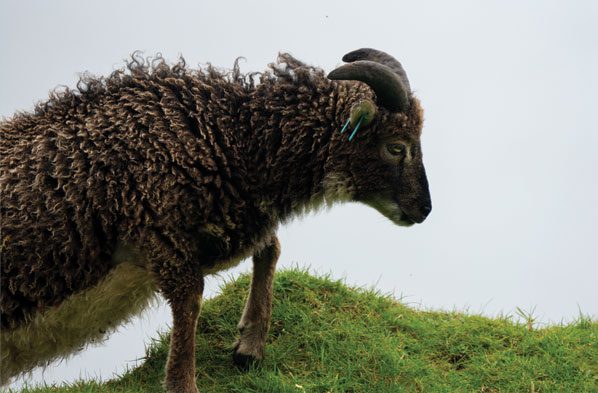
The sheep in question reside on Hirta, the largest island of the St Kilda archipelago, and were introduced by the then proprietor, the Earl of Dumfries, in 1934, four years after the last human inhabitants were evacuated with their sheep and cattle in 1930.
The Earl moved the animals onto Hirta from neighbouring Soay with a view to establishing a premium wool production enterprise; his plans never came to fruition and, left unmanaged, the population grew steadily, reaching 1,344 in 1960 before crashing dramatically to 610 the following year through starvation and parasitism.
Over the years, numbers have followed a three-to-four year cycle of rapid recovery followed by a crash, with the population fluctuating between 600 and 2,300.
The vets say that the worst crashes see up to 70% of the flock die, with more than 12,000 adults and 4,000 lambs dying in the 20 year period between 2001 and 2010, giving an average mortality of over 800 animals a year.
The petition marks the vets’ final move in what has been an ongoing battle to persuade Scottish Government and the National Trust for Scotland (NTS) to take responsibility for the welfare of the animals.
The vets hope that the petition will move Scottish Government to clarify the definition of protected animals contained in the Animal Health and Welfare (Scotland) Act 2006, with a view to ensuring that the sheep are covered by the legislation.
The issue of whether feral animals – those that have their roots in domestication but are now living as wild – are included in the guidance has been a subject of some controversy.
The guidance states: “Protected animals include the kind of animals whose collective behaviour, life cycle or physiology has been altered as a result of their breeding and living conditions being under human control for multiple generations. Livestock, poultry, horses, cats and dogs are all protected animals whether they are in captivity or living wild as ‘feral’ animals.”
NTS has owned St Kilda since 1957, but disputes ownership of or responsibility for the sheep. A spokesperson for the organisation said: “As a conservation charity, the National Trust for Scotland takes responsibilities relating to animal welfare seriously and always follows relevant legislation. The sheep will continue to be treated as feral animals with a presumption against intervention, except in exceptional circumstances such as a serious outbreak of disease that threatens the sheep populations.”
The sheep are also the subject of the well-established Edinburgh University Soay Sheep Project, set up in 1985 to study ‘population dynamics, evolution and genetics, ageing and parasite infection in a natural setting.’
In their Project overview, the researchers say: “…the Soay sheep population also offers remarkable opportunities for understanding the progress of natural selection and evolution in real time.”
The sheep were originally tagged by researchers in the 1960s, and each year the Edinburgh team round up and count the animals, tagging the lambs to provide a genetic record stretching back over the decades.
The vets point out that a death by starvation and parasitism is not a good one, quoting a description written by the late Ian Cheyne, a vet participating in the early study to illustrate the point:
“In 1964 the grazing was poor; the sheep were weak and emaciated. They were starving. Most of the sheep could be outrun easily by a man, and generally after running for about 50m the sheep would sink to the ground exhausted and distressed. Some sheep would not attempt to run, but stood listlessly with head down on tottering legs waiting to be caught.”
David Buckland and Graham Charlesworth say they have been forced to petition Parliament because all other attempts to resolve the issue have been unsuccessful:
“The starvation and the associated suffering of the sheep on St Kilda represent a failure by the establishment — those very institutions that should be leading the way in animal welfare.
“For a number of years now, in an attempt to garner support for our argument, we have written to or phoned so many politicians and organisations, including: Scottish and UK Ministers, the Scottish Animal Welfare Commission, OneKind, SSPCA, UNESCO, the Home Office, The Veterinary Record, the BBC … all in vain.
“St Kilda is a World Heritage Site and the Soay Sheep Project is world-renowned. We are two old vets who feel like the boy in the Hans Christian Andersen story shouting ‘The Emperor has no clothes’.
“So far no one is choosing to listen.”
The petition remains open for public signatures on the Scottish parliament website until mid May.