Bill Neill
Orchids are emerging and beginning to flower, spring is turning into summer and the number and variety of insect species is increasing.
Most early butterflies will have been Green-veined Whites (the Small White seems to be extremely rare and Large Whites will arrive later in the summer). There will have been a few sightings of Small Tortoiseshell as they emerge from their overwintering hibernation and a few early migrant Red Admirals and the less common Peacock butterflies will have been seen.
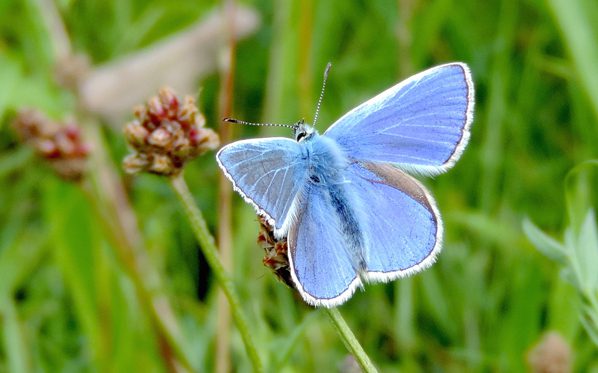
Butterflies that start to appear from now on include the large and attractive Dark Green Fritillary and the Common Blue. The form of Common Blue that occurs in the Isles and the north west of Scotland is a stunner. It is larger and bluer than those in the rest of Britain. Visitors to the islands often think it’s a completely different species. If you are very lucky, you my even find much rarer butterflies like the Speckled Wood or the Orange tip.
It’s not just the rare species we need to look out for. Taking note of common species is important when making accurate comparisons with past numbers and when spotting trends in growth or decline.
Some species are now spoken of as being like the ‘canary in a coalmine’ that predicts disaster. One such is the Great-Yellow Bumblebee that benefits from the lower levels of herbicide and pesticide use in the Hebrides. It is still found in reasonable numbers here but has disappeared from much of the rest of Britain. There is some concern that this cool climate bee will not enjoy the increase in rain and heat of the climate emergency.
Collecting and sending in details of what you see of easily identified common species is of great value and it is one way in which we can all do something about the huge declines in insect life. I know we all wish there were a few less when the midge and the horsefly arrive, but insects play a vital part in this environment we all share.
Leaflets giving more information on Butterflies, Moths and Bumblebees are available from various outlets and can be downloaded from the OHBR (Outer Hebrides Biological Recording) website, where you can also submit your sightings.
Photo copyright: Bill Neill
Outer Hebrides Biological Recording (www.ohbr.org.uk) Curracag
Outer Hebrides Natural History Society (www.curracag.org.uk)