Faye MacLeod looks back on the last 12 months and considers the future for island businesses after COVID-19
Sixteen out of the last seventeen years of my working life have involved a monthly visit to Uist to meet with and assist the hardworking individuals running their businesses in the islands.
Despite being able to see the Western Isles from my home on Skye, coronavirus restrictions have meant that I have very much missed my monthly trips to Uist over the last year. My colleagues and I have continued to provide support by telephone, email, and video conferencing, but it’s not quite the same as meeting in person and I look forward to getting back to my inter-island commute in the near future.
Living and working in the islands is a real privilege and over the last year, with the ongoing coronavirus restrictions, we have been able to appreciate where we live with a degree of freedom and sense of space that our city dwelling relatives have just not had.
During spells of good weather, we have been grateful for the natural beauty around us, where a beach walk or a hill climb was the order of the day. Tourists pay good money to enjoy what is an everyday norm for islanders. At the same time, it has been a tough year for those running their own businesses, many will face an uphill struggle to get back up and running again and, sadly, some will disappear altogether.
It has been quite surprising that the government has stepped in to support businesses in the way that they have with the introduction of furlough to retain jobs, Self-Employment Income Support Scheme grants, and a plethora of grant schemes designed to help various business sectors including fishing, retail, hospitality, and charities to name but a few.
These measures are aimed at helping the survival of businesses during the pandemic but unfortunately due to the speed with which these emergency measures have been introduced, there are several businesses and individuals who have fallen through the cracks, such as those who were in the process of starting new businesses or directors who were being paid via dividends.
Many businesses have taken government backed loans to survive through the pandemic and they will spend many years paying these loans back. Not all businesses will survive this ordeal.
The hospitality sector has been hit hard, and we have become even more aware of the fragility of the economy of the islands and just how many people now earn their livelihood from tourism. In the Western Isles the tourist season is shorter than in most of the country and 2020 has been described by some in hospitality as the year of the three winters.
This is particularly difficult as it is the income from the summer season that enables these businesses to survive the winter. As we head towards spring without the prospect of an early season Easter tourist boost, many businesses will be experiencing cashflow difficulties and will be counting the days until 26th April 2021 when it will be possible to reopen hospitality businesses again.
Reopening the hospitality sector however will have an added challenge in 2021 as Brexit has now taken effect and we can no longer employ staff from Europe with the ease that has been enjoyed in the past. This will be tough for an industry that can at times struggle to find enough local staff willing to work anti-social hours for relatively low pay.
Unless EU workers have previously been working in the UK and been able to get settled status under the EU Settlement Scheme, businesses will have to apply to sponsor an overseas worker with a requirement that there is a minimum annual salary of £25,600, which is in the region of £13-14 per hour. This is considerably higher than the minimum wage of £8.91 which currently exists in the UK and will inevitably result in employment shortages in hospitality.
Brexit has also had a huge impact on our industries dependant on export markets. This has been particularly apparent for our fishing industry and other seafood related businesses for whom 1st January 2021 had particularly painful significance. The free trade previously enjoyed as a member of the EU was removed and exporting time critical fresh produce became a logistical nightmare with the added burden of obtaining Export Health Certificates and customs and VAT declarations.
We have seen Scottish seafood lorries travel to London to protest at the Brexit red tape that has delayed and, in some cases, ruined exports of fresh shellfish. Grant support has been provided to fishing businesses to help them cope with financial losses, however the industry is looking for the ability to trade with the EU without unnecessary delays and bureaucracy as opposed to financial handouts.
As well as having to deal with the COVID-19 pandemic and Brexit, the islands have a further restriction imposed on their trading capacity due to limitations on ferry capacity. While the Isle of Skye enjoys the freedom of a bridge enabling unfettered tourist numbers to visit the island (although this is not always a welcome consequence) the Western Isles are limited to those tourists who can secure a ferry booking or flight to the islands.
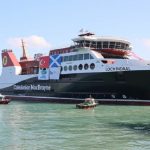
The same ferries are also an essential lifeline service for islanders and businesses operating in the Western Isles. In addition to experiencing difficulties obtaining ferry bookings throughout the summer season, islanders have also had to deal with significant disruption due to ferry breakdowns, as the ageing fleet of ferry vessels struggles to cope with the demands of the modern traveller. Island businesses live in fear of the next major ferry breakdown and how they will cope with the consequential financial loss.
For hoteliers in Uist in particular, a major ferry breakdown during the summer season, following the losses from the 2020 coronavirus pandemic, would be the final straw. Since last March ‘furlough’ has become a part of our everyday vocabulary since the introduction of the Coronavirus Job Retention Scheme.
For employers and their employees in the hospitality sector, the Chancellor of the Exchequer’s announcement that such a scheme was to be rolled out was a huge relief. This scheme was not just for the hospitality sector however, and when the nation went into lockdown, most employers had a ready-made scheme to enable those employees who could not continue to do their work from home to receive 80 percent of their normal wage.
The scheme was initially expected to be a short-term measure but in the budget last month it was announced that the scheme will continue until September 2021, more than 18 months after it was first introduced. The scheme has been vital to retaining jobs that would otherwise have been lost, and this was particularly welcome over the winter period in the islands where we are dependant on seasonal work in many sectors.
Last month’s budget did not bring any major changes to the tax system, other than a future increase to the corporation tax rate from 2023, which was overall a relief for businesses and taxpayers in general. One welcome announcement was the extension to the five percent VAT rate for the hospitality until the end of September 2021, followed by a 12.5 percent VAT rate for a further six months.
Businesses are grateful to be provided with a financial measure that helps as a consequence of trading as opposed to grants to remain closed. This gives the hospitality industry an incentive and a degree of hope for the future.
Remote working has become an everyday working norm for the country. Post coronavirus there will be a return to physical office working and in-person meetings, but it is hoped that some online working will continue, and this will be a lasting benefit to islanders.
Is this also an opportunity to help repopulate the islands as those living in the cities realise that in certain jobs it is possible to work from anywhere and that for a young family, there is no better or safer place to raise children than in the islands? I hope so, particularly if we can address the housing crisis in the islands.
There is a need to find solutions to the lack of affordable housing and difficulties in young people accessing self-build mortgages in the Highlands and Islands for the continued stability and vibrancy of the islands.
Finally, as we know, islanders are a hardy bunch and a world pandemic is not going to keep the Uibhistich down.
I have been pleased to note that in the last year many islanders have continued to develop new business plans looking towards the future of the islands and some welcome job creation. Some are using the coronavirus grant schemes and loans to create new business opportunities, as well as looking to bring new investment to the islands, which gives us hope as we start to contemplate the business sector post COVID-19.
Faye MacLeod is a chartered accountant with Campbell Stewart MacLennan &Co.