Delivering under pressure Third sector’s plea to Uist Councillors
Representatives of Uist’s Third Sector met with elected members last month to set out the challenge of delivering services in the face of staff and budget shortfalls.
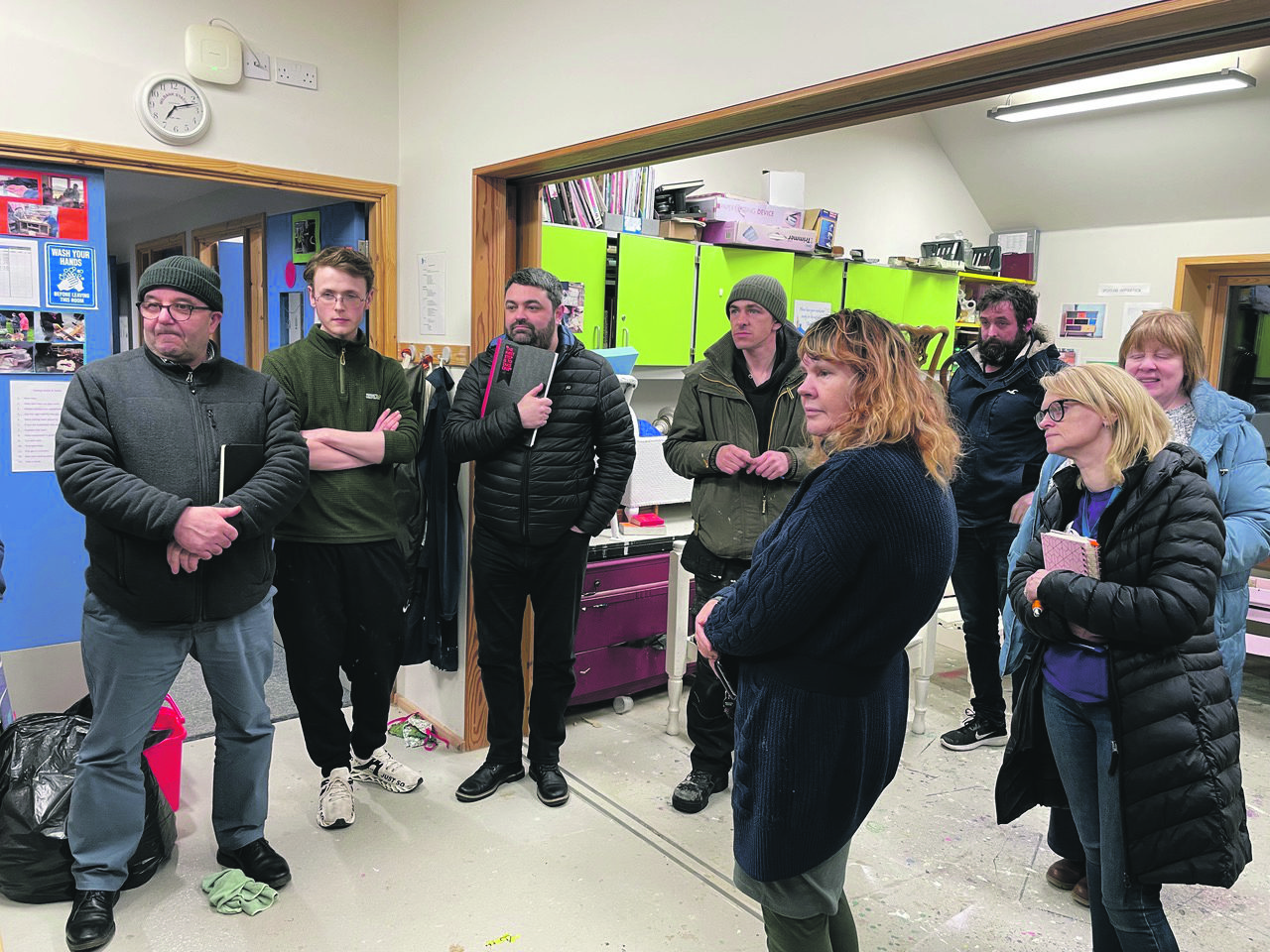
The meeting started at Tagsa Uibhist’s Balivanich HQ, and moved on to Cothrom in Ormiclate, with representatives from these two organisations, Caraidean Uibhist and UCVO presenting a strong case to Councillors Paul Steele, Mustapha Hocine and Susan Thomson.
Widely reported staff shortages in health and social care were described as a ‘ticking time bomb’ with organisations highlighting the ‘constant struggle to recruit and retain staff.’
Tagsa Uibhist Chief Exec Chris MacLullich said that recruitment and retention issues were impacting progress: “Our 28 carers are supporting around 60 service users and that leaves very little room for flexibility. Last year we delivered around 13,500 care hours; this year that figure is down to 11,500 as a result of staff shortages. It’s a situation that is likely to get worse, as a good number of our care staff are getting on in years and are working flat out at a time when they may like to consider slowing down.”
Leader Paul Steele said the Comhairle recognised the seriousness of the staffing crisis, saying: “In terms of the Care at Home service, we carried out a recruitment and retention survey in 2022 and based on the results we looked at a number of issues that would help us shape service improvements as well as address the recruitment and retention challenges. The first three of the changes we implemented were a one-off £600 retention payment, an increase in the mileage rate from 45p to 56p per mile and the full payment of additional shifts worked to provide additional financial security for staff. It’s evident from the survey that change is required to improve employee satisfaction levels and we continue to investigate ways to show the value placed on the employees and the services they provide in the community to help with the retention and recruitment of carers.”
Funding was another key area of concern, as Cothrom Chief Executive Kevin Morrison highlighted: “Here at Cothrom, those who don’t fit well in traditional educational models are able to learn in an environment that suits their needs and gain the qualifications they need to set out on a more positive path. This is crucial work but as budgets are cut, we are finding it harder to do a good job; harder to add that value that so many of our service users are depending on.”
The theme of funding was picked up by Caraidean Uibhist Manager Jo Sinclair, who explained that many Third Sector organisations were relying on short term allocations from external trusts and charitable bodies, which made long-term planning difficult: “We get no statutory funding from the Integrated Joint Board or the Comhairle, so find ourselves competing for national funding pots that are over-subscribed to the tune of 400-500%.
“Statutory authorities talk about ‘community empowerment’ but what they often mean is ‘delivering for free through voluntary effort’. There is only so much the third sector in Uist can deliver without adequate funding – there comes a point when we are all stretched so thin that we are in danger of breaking.”
All delegates recognised the importance of open and honest lines of communication, highlighting the real opportunity that a better understanding between the Comhairle and the Third Sector would bring.
Frustrations were aired that Uist is not always fully considered by Stornoway-led Comhairle projects, with the recent Community Transport consultation highlighted as an example where Uist experience and expertise could have added real value.
Alex MacKenzie, Tagsa’s Research and Development Officer summed up this sense of lost opportunity, saying: “So much good work gets delivered; so much energy and expertise is directed to projects that go round and round without really being fully recognised and valued. These crucial pieces of a wider jigsaw are being missed because there is no clear sight of how and where we fit into the Comhairle’s strategy.”
The Councillors praised the work the Third Sector delivers, recognising both challenges and opportunities, and while each offered their unequivocal support, the dark cloud of budget cuts loomed over the meeting.
With the Comhairle facing a deficit of £6.4m, it is difficult to see how greater financial security can be achieved for the support services on which our community relies.