By Torcuil Crichton MP
The sight of US military aircraft taking off and landing at Benbecula and Stornoway airports this month has heralded a new chapter in global politics, one which will have a direct effect on our islands.
The seizure of the rogue tanker Marinera in the Atlantic, which followed on quickly from the American coup in Venezuela, showed us that the world no longer runs along the old tracks of a rules-based order.
People rightly feel concerned when they hear the thump of rotor blades over their homes and see military hardware parked on the runway apron.
In the wake of the tanker seizure, I said in the House of Commons that events in the Atlantic were “too close to home” if you live in the Western Isles, reminding colleagues of our geography. There may be a frontline in the Donbas, where brave Ukrainians are facing down Putin’s invasion, but our frontline is our backyard, out there in the wild north Atlantic.
There has always been a striking amount of military activity in the Atlantic, but the seizure of the tanker has sharpened our focus.
People report sightings of Russian shadow fleet ships, the embargo-busting tankers shipping Russian and Iranian oil, quite regularly. This last week, a French warship could be seen online tracking a Russian vessel southward through the Minch.
As last year’s NATO exercise Formidable Shield concluded, the Royal Navy destroyer HMS Dragon had its sights still fixed on the Russian intelligence-gathering ship ‘Yuri Ivanov’ as it loitered off the Hebrides.
Three days before Christmas, the Russian research ship ‘Akademik N. Strakhov’ turned up less than 20 miles north of the Butt of Lewis.
These shadowy vessels are part of Russia’s strategy of disruption and denial of service, and while falling short of outright conflict, they are, nonetheless, a serious threat.
Life and communications in the UK rely on hundreds of subsea cables, criss-crossing the Atlantic. It is this network that the Russians are attempting to map.
In the Baltic Sea there have been repeated attempts to cut, anchor-drag and destroy communications cables.
All of which we should see as a Russian rehearsal for their north Atlantic plans. The Royal Navy and RAF are on round the clock patrols to let the Russians know that we know they are there.
While UK forces backed up the seizure of the Russian-flagged tanker, President Donald Trump’s rhetoric on Europe and Greenland makes it clear that we ought to rely less on the USA and more on ourselves and our European allies when it comes to defence.
That’s why deals like Norway’s contract for ten Type 26 frigates to be built on the Clyde aren’t just good for jobs. It will mean the UK and Norway, and Denmark too, will effectively have an inter-operable naval force in the Atlantic to keep the Russian Northern Fleet and their submarines contained.
Sub-sea drones, and aerial drones, will play a big part over the next few years. The Dragonfire laser system enabling Royal Navy ships to take out small, unmanned aircraft was developed and tested at the Qinetiq range in South Uist.
The field of conflict may be closer than we think, but the expertise to support our military operations is reassuringly close to hand.
The MOD’s Atlantic Bastion programme is developing a new range of anti-submarine sensors and remotely controlled attack vehicles to match Russia’s increased threat to critical undersea cables and pipelines. This enhanced capability will enable the UK to find, track and, if required, act against adversaries with unprecedented effectiveness across vast areas of ocean.
The UK government is not sitting back and waiting for events to overtake us. But if we are entering a new phase of conflict then we, as islanders, have some advantages.
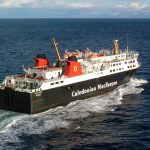
Cancelled ferries, bad weather and lost connections mean we are often faced with empty supermarket shelves. Most of us have the resources to cope and we have communities strong enough to make sure the vulnerable are not overlooked.
When lightning strikes frazzle the broadband router, we go to the loft and take out the spare broadband router because, inevitably, something like this was always going to happen.
In other words, we are resilient, or at least more prepared than most to adapt quickly and to be self-reliant. That island resilience, which we take for granted, may be called on more in this new age of uncertainty.